
Inside: The Flexible Degree Option Busy Mums Actually Need. Collaborative post.
There comes a point for a lot of mums where the idea of going back into education starts quietly sitting in the back of the mind again.
Not necessarily because they suddenly want to change everything overnight, but because life changes after motherhood. Priorities shift. Confidence shifts too sometimes. Careers pause, industries evolve, and many women eventually start thinking about qualifications they once put aside because family life understandably came first.
The problem is that traditional education models were never really designed around modern motherhood.
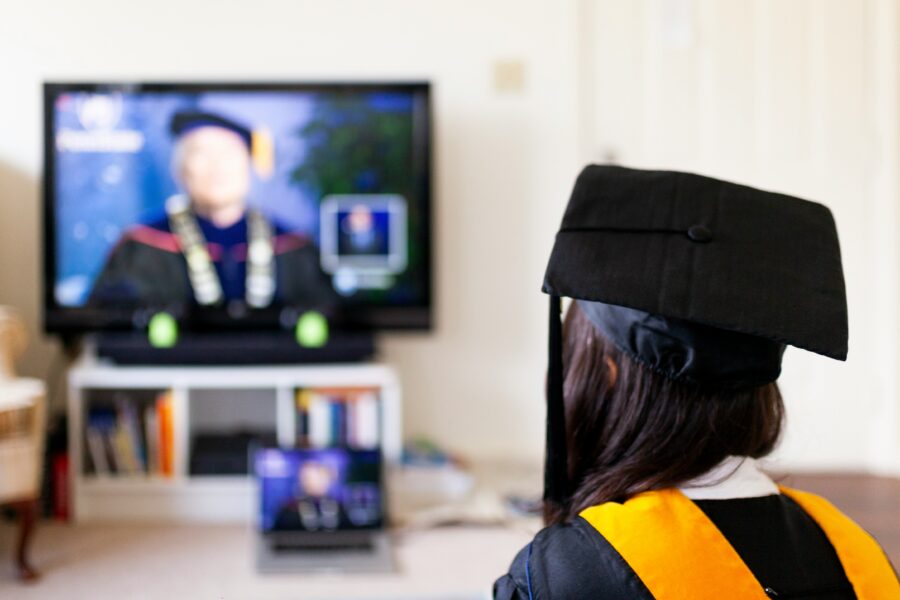
Photo by Mohammad Shahhosseini on Unsplash
Fixed timetables, commuting, rigid schedules, childcare logistics, school runs, part-time work, and household responsibilities make full-time campus life unrealistic for many women raising children. And honestly, that reality stopped a lot of mums from even considering higher education for years.
Moms are looking for ways to rebuild career confidence and personal identity alongside parenting responsibilities rather than separating the two entirely.
Master’s Degrees Mean More Than They Used To
One of the biggest changes happening in education right now is that online master’s degrees are becoming far more accepted and respected than they were even a decade ago.
Years ago, many people still viewed online degrees as secondary alternatives to traditional campus education. That perception has changed significantly as major universities expanded digital programmes, employers became more familiar with remote learning, and professional industries themselves became more digitally integrated overall.
Universities like University of Central Florida, Arizona State University, and Penn State World Campus have all invested heavily in accredited online graduate education over the last several years, helping online master’s programmes become far more mainstream professionally.
For busy mums especially, this shift matters enormously because flexible online learning finally allows education to fit around real family life instead of forcing family life to fit around education.
What stood out to me while looking at UCF’s online master’s degrees specifically is how strongly the programmes are built around flexibility for working adults and parents. UCF now offers more than 30 fully online master’s programmes across areas like healthcare, engineering, business, social work, education, and public administration, all designed so students can study remotely while continuing to manage careers and family responsibilities.
A lot of people researching postgraduate options now are not necessarily looking for the “traditional campus experience” anymore. They are looking for accredited programmes that realistically fit into adult life without requiring them to pause everything else for two years.
That is partly why online graduate study feels emotionally different now too. Studying no longer automatically means stepping away from parenting life in order to continue progressing professionally. Instead, universities are designing programmes around the reality that many graduate students are already balancing careers, children, and long-term financial responsibilities at the same time.
Online Learning Feels More Normal Now
One reason online degrees gained legitimacy so quickly is because remote communication itself became standard across modern work environments.
Meetings happen virtually. Teams collaborate remotely. Professional certifications operate online. Entire industries now function through cloud-based systems and digital communication platforms daily.
Because of this, employers care more about accreditation, skills, and practical knowledge than whether coursework happened physically inside a lecture hall.
Online learning has become deeply integrated into mainstream university systems rather than existing separately from traditional education.
Mums Often Need Flexibility More Than Motivation
One thing I think people misunderstand about mothers returning to education is that lack of ambition usually is not the issue.
Most mums already manage extraordinary amounts of responsibility every day. The real challenge is finding educational systems flexible enough to work around actual life logistics.
School pickups, sick children, meal preparation, childcare gaps, emotional labour, bedtime routines, and part-time jobs create schedules that rarely fit neatly into rigid academic structures.
Evening Study Fits Real Family Life Better
Flexible online programmes became especially important because they allow study to happen during realistic windows of time.
For some mums that means studying after bedtime. For others it means coursework during nap times, lunch breaks, early mornings, or weekends. The flexibility itself often matters more than speed of completion.
Accessibility and schedule flexibility are still major advantages within online learning systems. This is particularly important for mothers balancing multiple responsibilities simultaneously.
Returning To Education Often Rebuilds Confidence
Another thing many women quietly mention after returning to study is how much it improves confidence outside education itself.
Motherhood can sometimes narrow personal identity unintentionally, especially during years heavily focused on caregiving. Many women begin feeling disconnected from professional goals, independent achievement, or intellectual growth simply because daily life becomes so focused on everyone else’s needs.
And mothers often struggle with identity loss after years spent prioritising caregiving above personal development.
Education often helps rebuild that confidence gradually.
Professional Industries Are Changing Quickly
Another reason flexible education matters more now is because industries themselves are changing rapidly.
Healthcare, education, business management, digital marketing, cybersecurity, analytics, and administrative fields require updated qualifications or specialised training. Many women returning to work after extended caregiving breaks feel pressure to refresh credentials or adapt to newer professional systems.
Flexible postgraduate education helps bridge that transition more realistically.
Career Changes Are More Common Than Before
A lot of mums returning to education are not necessarily going back into the exact careers they originally left.
Some women completely change industries after having children because priorities, schedules, and work-life expectations evolve. Others pursue leadership roles, specialised certifications, or careers offering greater flexibility than previous positions.
Online Learning Supports Gradual Career Growth
One major advantage of flexible online programmes is that they allow gradual professional development instead of requiring abrupt life changes.
Women can often continue parenting, part-time employment, or existing responsibilities while progressing academically at the same time. That slower transition feels far more sustainable for many families financially and emotionally.
Online education supports wider access for adult learners balancing employment and family responsibilities.
Mothers Already Have Transferable Skills
One thing modern workplaces acknowledge is that mothers already develop enormous practical skills through everyday family management.
Organisation, multitasking, communication, emotional regulation, scheduling, conflict management, budgeting, logistics, and adaptability all transfer directly into professional environments even though women often underestimate those abilities themselves.
Time Management Becomes Extremely Valuable
Interestingly, many mums returning to education become highly disciplined students precisely because their available time is limited.
Structured schedules, prioritisation, and strong self-management often become survival skills during motherhood itself. Those same skills frequently translate well into flexible academic environments where independent organisation matters heavily.
Successful online learning is also closely connected with self-discipline, scheduling ability, and proactive engagement.
Flexible Degrees Are Changing Educational Access
Perhaps the biggest shift happening overall is that education is finally becoming more adaptable to actual adult life.
For decades, higher education largely assumed students operated without caregiving responsibilities, household management, or complex family schedules. Modern online programmes are gradually changing that assumption.
Flexible degrees now allow many women to continue growing professionally without completely separating education from motherhood.
And honestly, that change probably matters far more than many people realise.
Because for busy mums, the issue was often never capability. It was whether education systems were flexible enough to fit around real life in the first place.