
Inside: Piano Lessons for Kids: Harnessing the Harmony of Learning. Collaborative post.
Imagine the enchanting sound of piano music filling the room as your child’s fingers dance across the keys. While it may take time to create a miniature pianist, the benefits of learning to play the piano at South Shore Piano School go far beyond music.
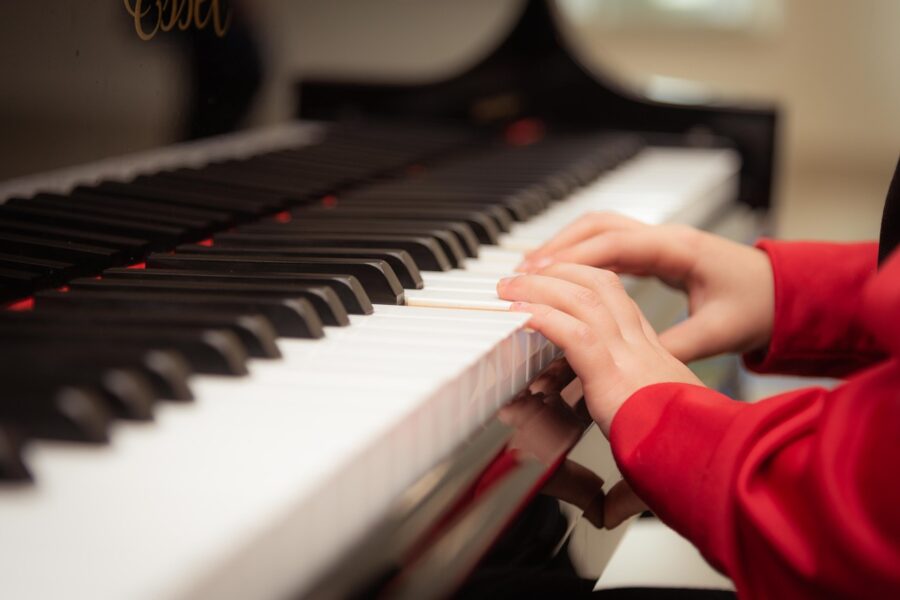
Music education builds children’s self-confidence and helps them express themselves creatively. It also teaches them problem-solving and critical thinking skills. Music education also fosters emotional growth and helps children develop a sense of self-discipline. Let’s take a closer look at a few of the benefits of piano lessons for your child.
Cognitive Development
Studies have found that learning music can boost academic performance in areas like reading, math, and language. Playing music can help improve concentration, critical thinking, and memory skills. Students who take music classes often score higher on academic achievement tests than those who don’t get the chance to learn music.
Emotional & Artistic Expression
Playing the piano is a great way for children to express themselves creatively and explore their emotions. It helps them develop their imagination and thinking skills. Children can understand how music can make them feel and express themselves in new ways by learning to play different types of music. Playing the piano also requires problem-solving skills, which helps children learn to think critically and master music pieces.
Discipline
Learning to play the piano requires dedication and commitment. It instills in children the value of hard work and determination, which translates into taking responsibility for their practice and music education. These qualities can then be applied to other areas of their lives, promoting self-discipline. Moreover, playing piano can enhance fine motor and problem-solving abilities, boosting self-confidence and self-esteem.
Cultural Appreciation
Learning to play the piano can help kids learn about different cultures. When they play music from different parts of the world, they can understand and appreciate the different styles and backgrounds. This can help them be more understanding and respectful towards people from all over the world. Playing the piano can also help children appreciate music, art, and culture in general.
Long-Term Benefits
Playing the piano can be really good for kids in the long run. It can help them be more creative, better at solving problems, more disciplined, and more confident. They can also learn to appreciate different types of music and cultures. As they get better at playing, they can feel really proud of themselves for mastering new songs and achieving their goals.
All the practice and hard work they put into playing the piano can help them in other parts of their life, like school and work. If you’re considering getting your child into music, learning to play the piano might be a great place to start.
Children can gain many advantages from playing the piano, including enhancing their imagination and critical thinking, building discipline, and growing their appreciation of different cultures. These skills and qualities can have a lasting effect on their lives, giving them the chance to achieve their maximum potential.