
Inside: How to Declutter a Garage Before Relocating. Collaborative post.
Moving to a new location (or country) can be exciting. You’ll have new neighbourhoods to explore, interesting people to meet, and a whole range of new experiences. But before you get to experience all of these, there’s a period everyone dreads: actually moving.
If you’ve been living with kids, dogs, and cats at your old house for a while, you’re probably afraid to even think about the pile of things you’ve hidden away in the attic, basement, and garage. And if your house only has the garage as the main storage space…then may luck be on your side.
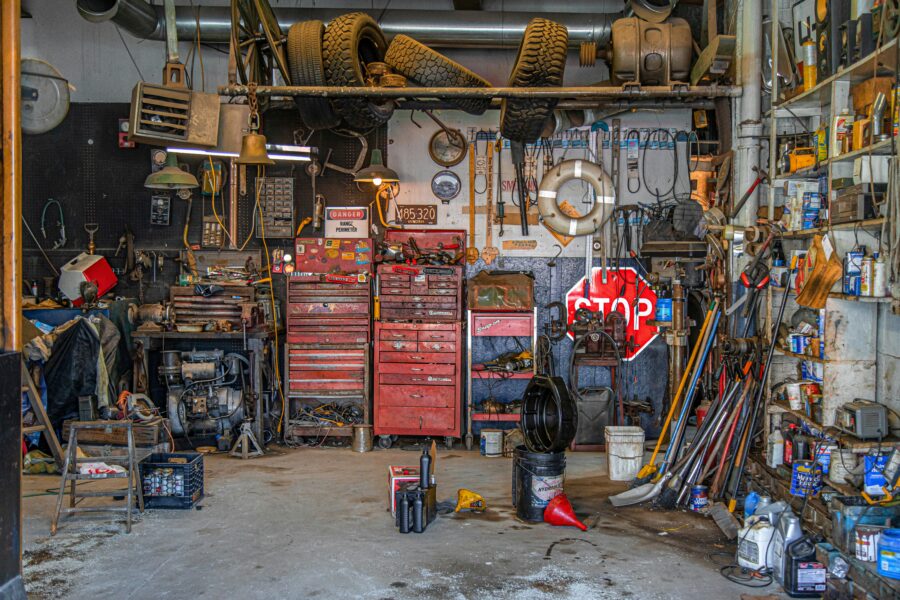

Photo by todd kent on Unsplash
But hey, whether you like it or not, you have to start somewhere. And it’s best to start early and decide what to keep and what to give away. So, arm yourself with patience and start by reading our tips on how to declutter your garage, especially when you have big tools and machinery lying around.
The Garage Decluttering Plan
Before you start packing, you need to sort through everything and decide what will happen with each item.
Extra tip: Don’t expect to sort through everything in one day. It took years to gather everything, so give yourself at least a week to sort things out. Also, if you can, remove any big machinery from the garage. If not, find a way to work around them without causing any damage.
Start by dividing the garage floor into four distinct zones: Keep, Donate, Sell, and Trash/Recycle. Label each area clearly with signs or colored tape.
Next, decide on the direction you’ll work in. The garage door is point zero, and you have to decide if you’ll go left and work your way to the other side, or take the inverse approach. Once you decide on the direction, stick to it. Don’t jump from one area to another.
As you move through the space, take everything out of cabinets, off shelves, and out of boxes. This will force you to evaluate each item individually.
Decide on Keep, Sell, Donate
You’re the one who knows best what’s worth keeping and what should be discarded, but here’s what movers recommend (in case you’re undecided):
What to Keep:
- Tools you use for home maintenance and repairs (hammers, screwdrivers, wrenches, etc.).
- Family heirlooms or items with high sentimental value.
- Christmas decorations, sporting equipment, and camping gear that are in good condition.
- Items that are expensive or difficult to replace.
What to Sell:
- Furniture, well-maintained lawnmowers, power tools you no longer need, or sports equipment in good condition.
- Any collectables or valuable antiques you don’t want to take along. To get the best price for such items, consider a local auction house or a specialised online forum.
What to Donate:
- Any item that is in good, working condition, but you no longer need. This could include old bicycles, gardening tools, small furniture, or household goods.
- Old clothes or sheets that are still in good condition. Donate them to a local charity like Goodwill, Salvation Army, or a community shelter.
What to Trash/Recycle:
- Anything that is broken beyond repair.
- Hazardous materials, like old paint, motor oil, batteries, and chemicals (like cleaning supplies). These should be disposed of properly, so check with your local waste management facility for specific instructions on how to handle these materials.
- Old tires can often be recycled at tire shops or designated recycling centres.
Sorting through years of accumulated items can be emotionally and physically draining, so turn it into a family activity. The kids will love to reconnect with their old toys and belongings, and it can be a great way to help them say goodbye to some stuff.
What To Do With Large Equipment
If you own ride-on mowers, compact tractors, and other farming equipment that you want to bring to the new location, it’s a good idea to plan for their shipping ahead of time. These require special handling and even more special transport.
Look into local trailer transport companies that suit your budget and needs. If you’re new to this, ask them for advice on the type of trailer to use. For instance, a basic flatbed is a common choice for tractors and mowers, but if you have tall equipment, you may need a lowboy trailer. And if you have equipment of varying heights, you can use a step-deck trailer.
Start planning this shipment at least 1-2 months before your move. If you book in advance, you can choose the day and secure better rates.
Wrap Up
If you’re organised and start the decluttering process at least a month before the moving date, this impossible task will become a much more manageable project. It’s not going to be easy, but if everyone gets involved, it will be a great opportunity to create more family memories before the big move.