
Inside: Zero-Waste Cleaning Hacks Every Eco-Conscious Parent Should Know. Collaborative post.
Keeping your home clean while juggling the responsibilities of parenthood can be difficult. But throw in a desire to be more eco-conscious, and things can get a bit much. After all, who has time to think about reducing their environmental impact when they’ve got young kids to manage?
Luckily, it doesn’t need to be that difficult. There are plenty of small changes you can make to reduce your environmental impact while still keeping a clean home.

Cleaning Hacks Every Eco-Conscious Parent Should Know
1. Switch to Glass
First and foremost, ditch the plastic storage containers. Glass is a far more eco-friendly option that’s also easier to clean. It’s (theoretically) infinitely recyclable, meaning there’s less waste if you ever need to throw it away.
A lot of glass storage containers are super sturdy, too, so you don’t have to worry about kids being rough with them. But if you have little kids and are concerned about using glass, bamboo is a viable alternative.
2. Find a Zero-Waste Shop
Zero-waste shops have been popping up everywhere in recent years, and they’re great places. Take your own containers along and stock up on pantry staples like oats, sugar, dried beans, and cleaning supplies.
It’s obviously up to you how involved you get, but zero-waste shops are a good option for eco-friendly cleaning supplies. Their prices are usually lower than those in supermarkets, and you can reuse your own containers.
3. Reusable Kitchen Towels
You may already use dishcloths for domestic cleaning, but have you considered ditching paper towels in favour of reusable cloths? You can buy rolls of absorbent reusable towels, or make your own from spare fabric you have lying around.
Of course, if you don’t think you can fully get rid of paper towels, look at how you can switch to a more eco-friendly option. Some brands use recycled paper while others use bamboo fibres. Sure, this isn’t completely zero-waste, but it’s pretty close.
4. DIY Cleaning Products
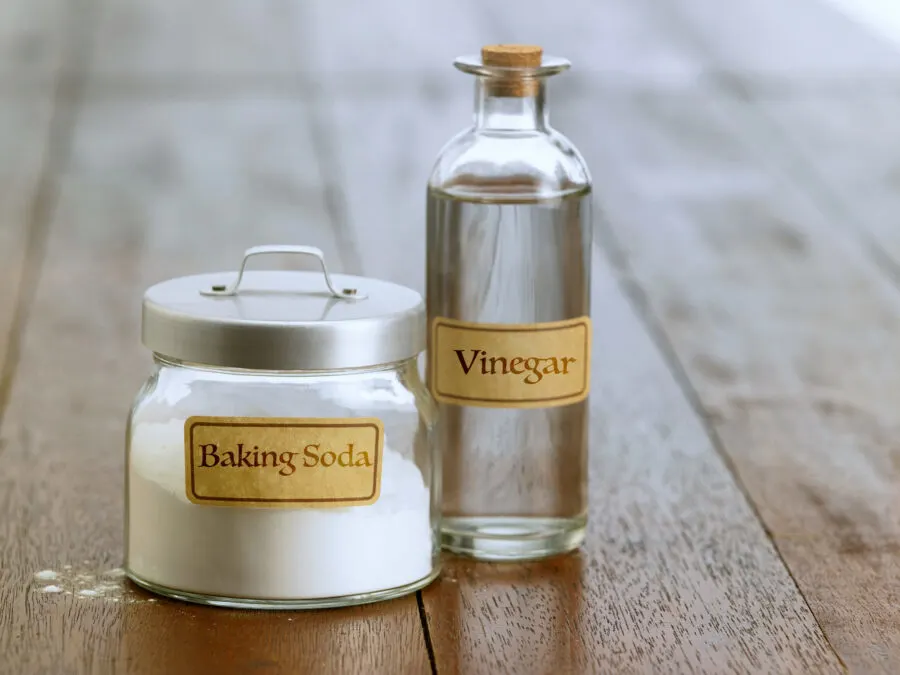
You’d be amazed how much of your house you can clean with 2 products: white vinegar and bicarbonate of soda. They work as natural deodorisers, grease busters, abrasives, glass cleaners, and more.
Better yet, you can usually get both at zero-waste stores for pennies. Buying in bulk should last you for ages and will help reduce your environmental impact compared to buying products from the supermarket.
5. Natural Cleaning Tools
What good is there in doing away with plastic packaging if you’re still buying things made from plastic or wrapped in plastic? Cleaning tools are a good example of this, particularly washing up sponges.
Options include natural sponge, loofah, or wooden brushes. If you opt for a brush, make sure it has natural fibre bristles, as you should then just be able to add it to the compost bin when you’re done with it.
6. Reuse Where Possible
Reusing tired or worn-out stuff is far better than trying to recycle it. Start by reducing your consumption as much as possible and then giving a second life to anything that can’t be used for its original function.
Kids’ clothes are a good example. While you can’t really reduce your use, you can donate them to food/clothes banks or repurpose them. Old clothes can be turned into dusters or cleaning rags, or even sewn into bags! Think about what you have lying around your home that could be used again for something else.
7. Be Realistic in Your Expectations
Going zero-waste is an admirable goal, but often not an achievable one. Our lives aren’t designed to be waste-free, particularly if we have kids. There are just some things that shouldn’t be reusable (such as toilet paper!), and some trying to cut down on our waste can be more trouble than it’s worth.
So, be realistic with yourself. Set achievable goals for your family – even if it’s just switching to eco-friendly cleaning products. Any change you can make will be a good one, and trying to reduce your environmental impact shouldn’t get in the way of you enjoying life.
Final Thoughts
Being eco-conscious when it comes to keeping a clean home doesn’t need to involve too many changes. The tips above are all easy to achieve without any noticeable sacrifices. Figure out which will be easiest for you and start with those before moving on to ones that might be a bit harder to action in your home.
With a bit of practice and some planning, you should be able to keep your house clean without relying on too many plastic products!