
Inside: Why SPF isn’t Just for Summer. Collaborative post.
Most of us know the best way to protect our skin against sunburn on a hot summer’s day is to apply – and keep reapplying – a generous dollop of high SPF sunscreen.
What many people don’t realise, however, is that the damage done by the sun’s ultraviolet light isn’t confined to the UVB part of the spectrum, which causes the skin to burn, blister, and redden if left unchecked.
There are also UVA rays.
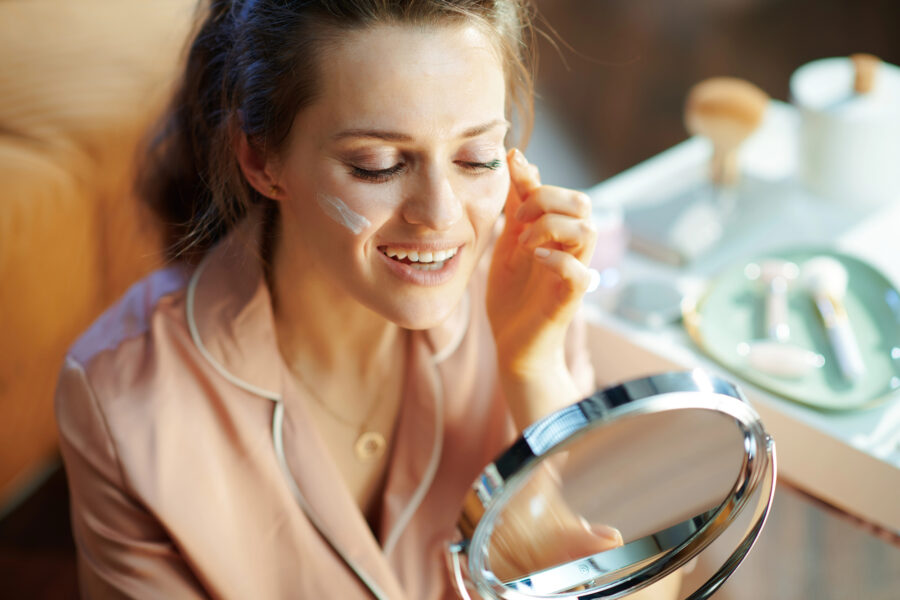
These don’t painfully sear the skin in the same way UVB rays do, but they can be equally – if not more – damaging to the skin in the long term by ageing and discolouring it.
In this post, we take a look at why a good SPF sunscreen needs to be part and parcel of your beauty regimen, not just in the dog days of summer, but year-round.
Grey Days
You could be forgiven for thinking that on those days when the skies are leaden and the sun seems to have gone into hiding, that its rays can’t do much damage to your skin.
But the fact is that UVA rays are present whenever the sun is up, not just when it’s sunny, which means that 80% of the rays reach our skin all year round.
UVA rays can also penetrate and even be magnified through glass, so while you’re sitting next to a window, whether in a building or even the car, you will inevitably be exposed to sunlight that can damage your skin.
Winter Whiteness
It’s not just on those days when the skies are overcast and steely grey that you need to be on your guard against the sun.
When it’s snowy and icy, your skin can be flooded with just as many damaging UV rays as on the hottest summer day.
That’s because sunlight loves to reflect off the white of snow and ice, flooding your skin with UV exposure from all angles.
So if you’re planning to venture outdoors, even during the colder months, it’s essential that you apply the SPF just as generously as if you were hitting the beach.
Skin Damage
The UVA rays that do the damage all year round have a longer wavelength than other types of UV rays, meaning they can burrow into the skin’s middle layer, the dermis.
This primarily affects how the skin’s collagen and elastin function.
Collagen and elastin play a determining role in how firm, smooth and generally bouncy your skin is.
As such, damage to collagen and elastin can lead to:
- Premature ageing (fine lines and wrinkles).
- Hyperpigmentation, discolouration and dark spots.
- Loss of skin elasticity and firmness.
- Generalised unevenness of skin tone.
- Long-term skin damage.
Routine Protection
The secret sauce of any skincare routine is sunscreen, especially if it’s applied at just the right moment to afford the wearer maximum protection.
Sunscreen should be used after you have used any facial serums and moisturisers, but before you apply makeup.
This will allow the sunscreen to serve as a protective barrier that locks in the goodness you have applied and blocks the UV rays that want to damage your skin.
Example Routine
- Cleanse the skin.
- Apply toner to tighten skin and close the pores.
- Use a serum such as vitamin C or hyaluronic acid to boost skin.
- Apply moisturiser to ensure skin remains hydrated all day.
- Rub in sunscreen to ensure it’s properly absorbed.
- It is then time to apply your makeup, if wearing any.
Broad Spectrum
It’s important to bear in mind that a good SPF rating is just one part of the story when it comes to sunscreen.
SPF tells you how well the cream will protect you against UVB rays, the ones that cause sunburn.
But it’s not always the best guide to understanding how much protection it offers against the rays that lead to things like premature ageing and pigmentation problems.
So if you’re looking for a sunscreen that provides all-round protection from all the UV rays the sun can throw at you, you need to find one labelled ‘broad spectrum’.
This will ensure that you’re afforded robust protection against both UVA and UVB rays.
Conclusion
In times past, SPF sunscreens were mineral-based and chalky, making them difficult to work naturally into a beauty regimen as they left a white cast to the face.
Today, things are different.
Lightweight and easily absorbed SPFs are widely available, meaning they can be used on all skin types and work seamlessly into your daily beauty regimen.
To learn more, explore the range of SPF sunscreens at Our Concept Beauty.