
Inside: Reading Practice for kids with the Reading Chest subscription. Collaborative post.
Reading is the foundation of all knowledge, so it is a crucial skill that children need to be taught to be able to learn as they move through life. There are many factors involved in helping a child learn to read but something that is very important is having access to books.
Learning to read starts as soon as we are born, listening to the voices around us and how fluency and expression is used in speech. We learn to use books while watching adults turn pages and we begin to recognise that words and letters on pages have meaning – developing their phonemic awareness. When ready, those letters are taught through phonics and that progresses into word recognition as they get older and access age appropriate books.
While many households will have plenty of picture books for children to listen to and look at, generally parents rely on schools to share the age & level appropriate books so their child can begin to read for themselves. Depending on the school, you may only get one book a week and this may not be of any interest to your child at all – stunting their interest and progress through the levels.
Banded reading books from Reading Chest
Reading Chest is a subscription service aimed at children still within the banded reading schemes, from early readers right through to the more fluent readers that simply need more practice before leaving the levels behind to become ‘free readers’.

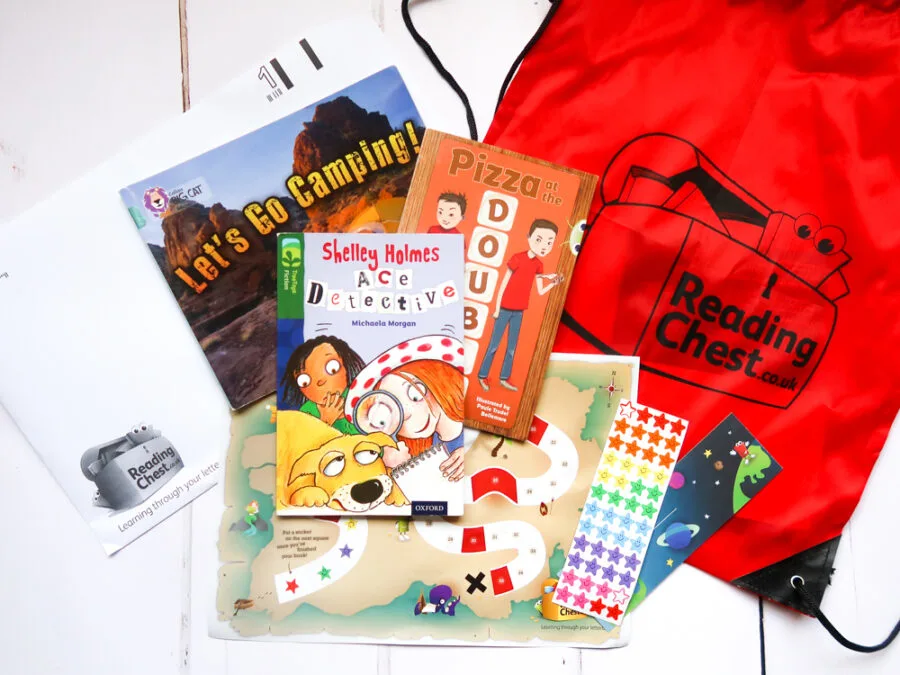
Children generally start on the banded system when they are between 4 and 5 years old, starting at pink level which has up to 5 simple words on each page, all of which they’ll be able to access using their phonic awareness or using knowledge of any sight words they have already picked up such as ‘mum’ or ‘dad’.
As their reading skills improve, they will move up through the reading levels, learn new words and develop their comprehension skills.


Reading Chest have books from pink level 1+ all the way through to the extended reading level 12+ (almost at independent reading level) which you are able to have delivered to your home so that your child can practice with a wider variety of books than they’d otherwise get from school.
How does it work?
There are 3 different subscription choices available, with different options for amount of books available per month and whether you would like to have multiple siblings sharing the service.

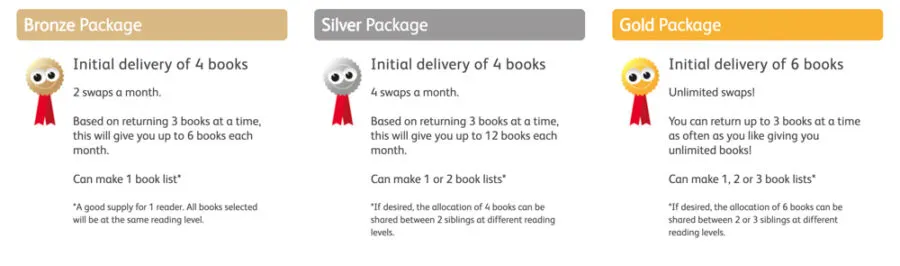
Bronze – 4 books to start, 2 swaps a month, 1 book list.
Silver – 4 books to start, 4 swaps a month, 1 or 2 book lists for siblings at different levels.
Gold – 6 books to start, unlimited swaps, 1 – 3 book lists for siblings at different levels.
You are able to choose the grade level for your child based on where they have been placed within school and can even create lists of preferred books from the selections available.
Your child will receive their first selection and then moving forward they will be able to send up to 3 books back at a time using the prepaid envelope. They will then be sent a new selection to read and enjoy. No deadlines, no pressure – it is always frustrating if you feel you don’t have enough time, isn’t it?
Making lists
Signing up to a book club or subscription such as Reading Chest provides your child with extra books to practice with, also giving them the ability to choose books that will be of interest to them specifically, whether they are short stories or non-fiction books.


If you are on a silver or gold package you can make separate lists for up to 3 children. Meaning the subscription is split between them, sending appropriate banded books for each child. We have 2 lists, one for my daughter who is in the final level and one for my son who is on blue level books.
When you log into your account you are also able to highlight books as favourites so they are prioritised on the next shipment. You can also delete books from the selection if your child doesn’t like certain themes or reading schemes.
Extra motivation

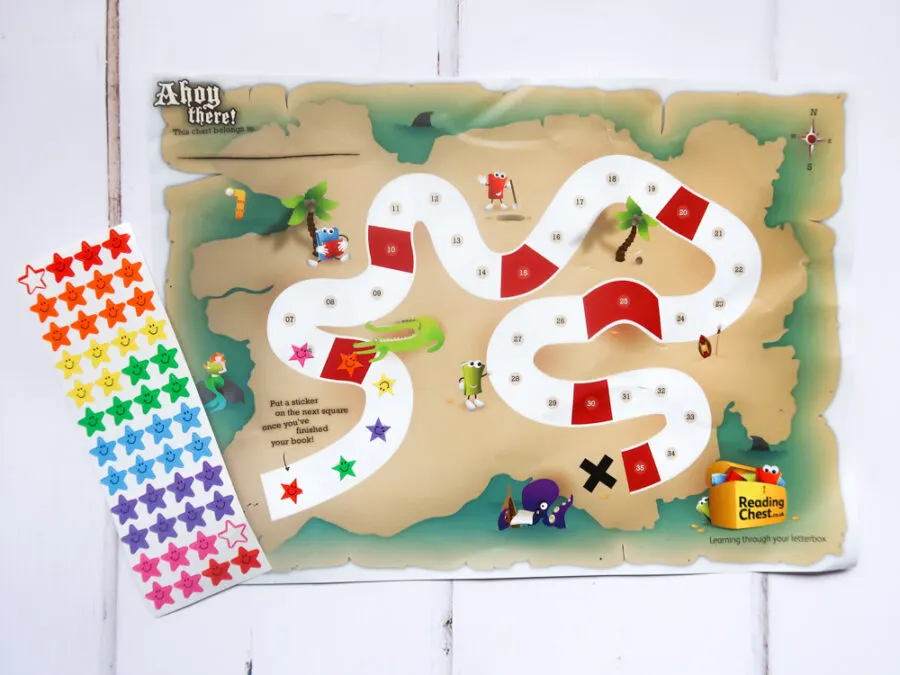
When you sign up, you are sent a sticker chart and stickers for your child – allowing them to add a sticker each time they read a book.


Each time they move up a band / level (or read 20 books) they will have a certificate added to their account, which you can print out at home. Positive reinforcement like this can help motivate children to keep going as they love the visual display of all their hard work.
Is my child ready to learn to read?
A good place to start is with letter recognition, making sure that your child is able to look at a letter and say the sound as well as hearing a sound and being able to find the letter. In both instances, you are looking for the phonetic sound each latter makes rather than the name of the letter. So, M would be ‘mmm’ phonetically, rather than ’em’ which is how you say the letter name.
Flash cards are a great resource to teach this and gets children used to saying the sounds quickly so that eventually this allows them to say a selection of sounds in quick succession to sound out an entire word. (There are many different ways to teach sounds so it is a good idea to find out the teaching method your local school uses if you can).
Once they have a good understanding of letters and their sounds, you can begin to introduce them to simple books within the first level of reading books. Some schools will often provide wordless books for children so they can get used to turning pages left to right and also to know that context clues such as pictures can often help when reading a story.
There are lots of reading games available, with various apps available but of course this increases screen time. The most important thing when they are very young is that they have access to books and have lots of opportunities to have books read to them. It is a great way to develop their love of reading and ensures they pick up reading strategies through watching you.
What are the different reading levels?
Different reading schemes use different numbers and / or colours to band their books so it is difficult to generalise. Plus, each child achieves the levels at different rates and ages so it is best not to hold too much importance to the levels. The thing to pay attention to is whether your child is making progress and enjoying the books they are reading.


Reading Chest use a variety of reading schemes within the subscription but group together books of similar difficulty when sending out books for your child. If you aren’t sure which band to start on, they give you example pages to look at so you can see the difficulty before making your selection.
How can I help my child?
When your child is reading a book there are a number of ways you can help them.
- Remind them to sound out. If they are stuck on a word, remind them to sound out each sound to see if they can hear a word.
- If it is a tricky word, tell them what it is and explain the meaning if needs be.
- Give them time. Sometimes they may pause while they try and process so don’t jump in to help straight away. They will be quicker the next time they encounter the word if they worked it out on their own the first time.
- Split longer words in two. Sometimes longer words are overwhelming so splitting them into two parts can help them manage easier.
- Ask questions. This helps with reading comprehension so they start to understand the words and the meaning they give to the story as a whole.
- Lots of practice. The more they read and interact with books, the more confident and able they will become.
Questions to ask your child
To help your child develop a deeper understanding of books, even as young readers, you can ask questions before, during and after each book.
- What do you think the book is about?
- What do you think will happen next?
- How do you think the character is feeling?
- Why did they do that?
- Did you enjoy the book?
- Can you remember what happened in the story?
Most reading scheme books will also provide discussion questions at the back of the book. They will often give you the key words that will be used within the book too, which you can go over before reading the book to help your child with any different words they may be unfamiliar with. Working on their comprehension even from a young age will help them to become better readers as they work through the book levels.
Encouraging a love of reading
If children don’t have opportunities to look at books and be read to, they aren’t able to understand the magic that stories can hold. So, when it comes to learning to read they can often push back and find the process a chore. As time goes on, and their peers are progressing around them, struggling readers see reading as an impossible task and withdraw completely.
To encourage a love of reading and enthusiasm for reading practice, it is our job as parents to show them how wonderful books can be. If you can catch a child’s attention early on, with funny stories and exciting adventures, then they will be more likely to want to engage with books on their own when given the chance.

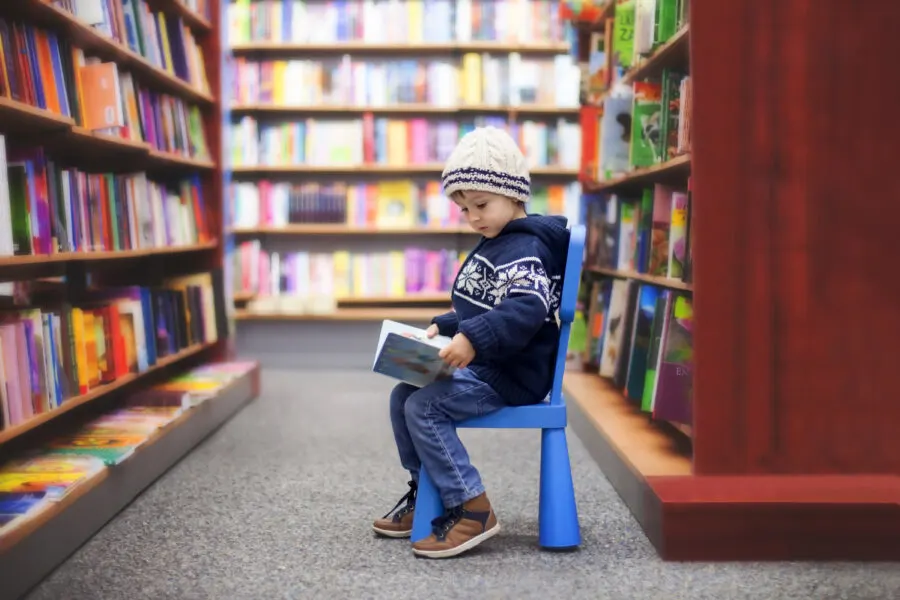
There are lots of other fun ways to encourage reading – visiting the library being one of them. There is something magical about a library and they will often run challenges each year, giving a certificate and medal at the end once completed.
The more kids practice and the more reading experience they have, the better equipped they will be to learn this important skill. And the great thing is, even before they become skilled readers, the more words they do manage to understand suddenly opens up a whole world to them. They realise that they can read to themselves, understand signs and labels, and this motivates them even further to keep practicing.
We are thoroughly enjoying our subscription, being able to choose interesting books rather than rely on the ones sent from school. The kids also love receiving their post – opening up the envelopes to see what books they have to read each time. I am noticing an improvement in their reading confidence already!
Reading Chest is the perfect tool to support your child at home and something I would definitely recommend! Find out more at readingchest.co.uk
Giveaway
I am able to offer a 3-month gold subscription package to one lucky reader. To enter the competition, just complete the form below. Good luck!
3 Month Gold Subscription from Reading Chest
Adrian Bold
Saturday 11th of June 2022
Level 10
Donna W
Saturday 11th of June 2022
We're doing the Biff, Chip and Kipper books and my daughter is currently on level 2.
Cerys Owen
Saturday 11th of June 2022
Level 10
Astrid c
Saturday 11th of June 2022
level 2
Troy Easton
Friday 10th of June 2022
Level 4