
Inside: Eco-Friendly Home Solutions: Are Solar Panels Still Worth It? Collaborative post.
Because of their effective CO2 offsetting and minimal running costs, solar panels, or photovoltaic (PV) panels, have become a popular option for homeowners across the globe. The International Energy Agency reported that 25 million worldwide homes rely on solar panels. This figure is predicted to rise to over 100 million homes by 2030 — so, what’s all the fuss about?
If you are considering switching to solar energy for your home, it’s important to weigh out the benefits and drawbacks that come with this innovative power solution. To determine whether this solution is right for your home, be sure to explore this beginner-friendly guide, detailing all you need to know about solar panels.

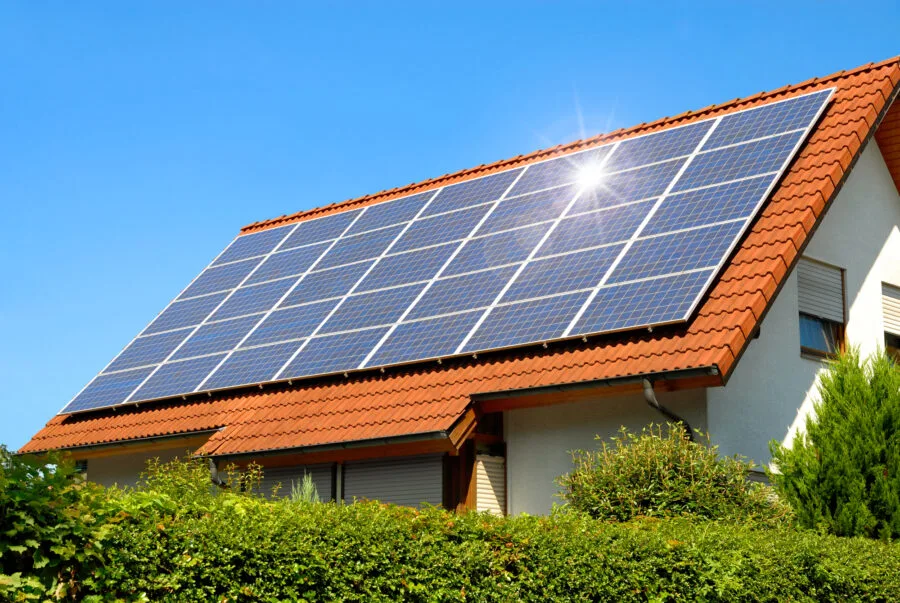
How Do Solar Panels Work?
Solar panels utilise the sun’s energy in order to generate electricity needed to power your home. To do this, they rely on a structure of photovoltaic (PV) cells which absorb the sun’s energy and convert it into a direct current (DC) of electricity. An inverter then converts the DC electricity to an alternating current (AC) — a form of electricity suited to powering households.
The AC electricity generated from solar panels can be distributed throughout your home, powering your lights, appliances, and other electrical components. Any excess energy produced by solar panels can be stored in special batteries or returned to the grid, enabling you to gain energy credits and minimise your energy bill.
How Much Do Solar Panels Cost?
The cost to install solar panels depends on several factors, including system size, quality of solar panels, and installation requisites. As of 2023, a 250W solar panel costs between £400-£500 (approximately $510.74-$638.42), whereas a 4kW system of solar panels can cost roughly £6,400 (approximately $8172.19).
While the upfront costs are often high, investing in solar panels can actually help you offset your energy usage and reduce your electricity bill.
The Benefits & Drawbacks of Solar Panels
Understanding the benefits and drawbacks of solar panels can empower you to evaluate whether this eco-friendly solution is right for your household. Weighing out these factors will enable you to understand if solar panels align with your financial flexibility, long-term goals, and household needs.
The Benefits:
- Sustainable & Renewable Energy: Solar panels harness the sun’s endless power and don’t emit any CO2, making it a renewable energy source that doesn’t disrupt our planet’s atmosphere. This means switching to solar energy will decimate your household’s carbon footprint and contribute to a cleaner environment.
- Energy Independence: Because solar panels are self-sufficient and rely solely on the sun, you will be independent from grid energy. This can save you from the burden of rising energy costs and power outages, giving your family peace of mind.
- Energy Savings: Solar panels can present substantial savings on your energy bill in the long-run. This is because you have more control and independence over the electricity being produced for your household. This means you will have extra cash that can be used for your family’s needs, such as a holiday fund, university savings, and so forth!
The Drawbacks:
- High Upfront Cost: As highlighted earlier, solar panels entail a high upfront cost. However, solar panels are relatively low maintenance, have minimal running costs, and are highly energy efficient, meaning you can effectively earn back your investment in savings.
If you have a restricted budget, you can also seek financing options to pay off your solar panels, offering you flexibility.
- Weather Dependance: Because solar panels depend on the sun’s energy, their efficiency can be affected by certain weather conditions with reduced sunlight, such as rain, thunderstorms, snow, and clouds.
However, modern innovations have made solar panels significantly more energy efficient, enabling them to capture indirect sunlight. You can also purchase a storage device, such as batteries, to store additional energy for days where the sun is hiding!
- Space Requirements: Solar panels work best when placed on rooftops, but if your home lacks roof space, you may not be able to accommodate a sufficient quantity of panels.
A solution to this is ground-mounted solar panels. These panels are strategically angled and raised to ensure they effectively capture sunlight and generate optimal energy. This option is also more accessible than roof panels, making them easier to maintain.
A Final Thought…
Understanding the positives and negatives of solar energy is key to ensuring you completely understand how solar energy aligns with your household’s needs and requirements. From sustainable energy to significant energy savings, solar panels present many attractive benefits.
Although there are some drawbacks to this energy solution, such as upfront costs and weather dependance, you can easily overcome them through straightforward solutions, such as financing, energy storage, and strategic placements. Overall, solar panels provide homeowners with immense long-term benefits which can compensate for any potential drawbacks.