
Inside: Dex Camera Update: How We’ve Used It Since Summer. Press sample included.
Back in the summer I shared my first impressions of the Dex camera. My son took it around the house and garden, photographing the kettle, the garden hose and anything else that stood still long enough. That was the honeymoon period, and I know honeymoon periods can be misleading.
So here’s the follow-up. Several months on, is Dex still in use, or has it joined the drawer of abandoned gadgets?
It’s still in use. Here’s how.
From Novelty to Habit
Most kids’ tech has a lifespan of about two weeks. The excitement fades, the battery dies, and it migrates to the bottom of the toy box.
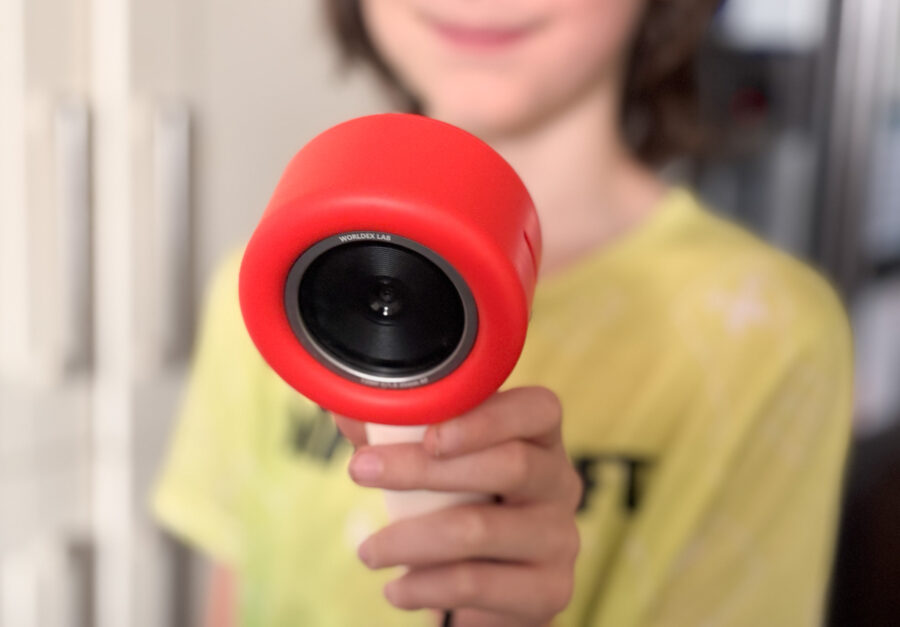
Dex didn’t do that. My 10 year old is motivated to learn Vietnamese so he can understand his friend’s first language. And the Dex language-discovery camera is helping him to incorporate learning a new language into everyday moments. Unlike apps that can feel abstract at times, Dex teaches new words that are necessary in the moment you are actually living, in the real world.
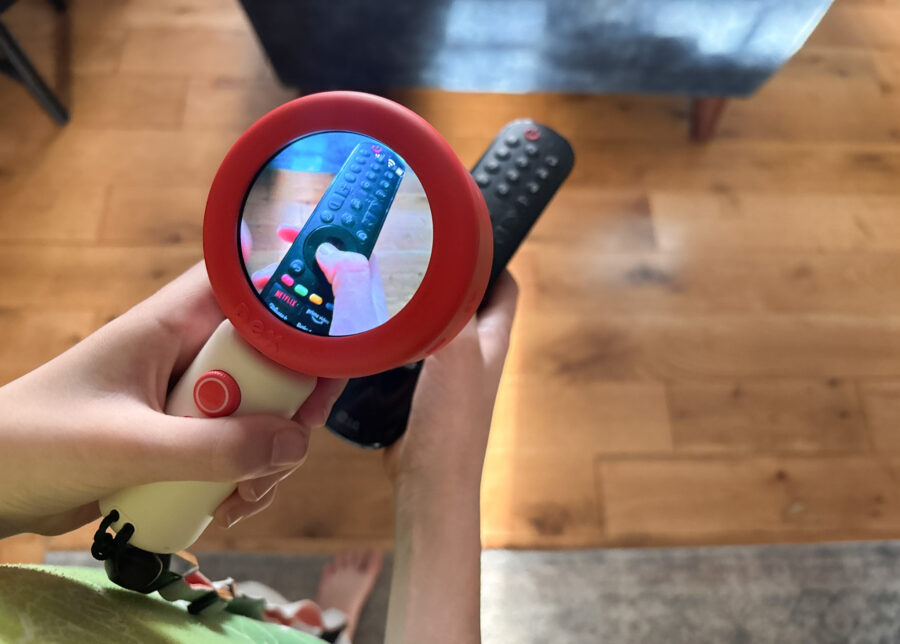
Of course he doesn’t carry it around absolutely everywhere, that would be unrealistic. But he reaches for it often, pointing the camera lens at objects he encounters to see what knowledge he can add to his ever expanding repertoire.
The real test of any educational product isn’t the first week. It’s whether it gets picked up in week eight, week twelve, week twenty. Dex has passed that test in our house.
Where It Fits in Our Week
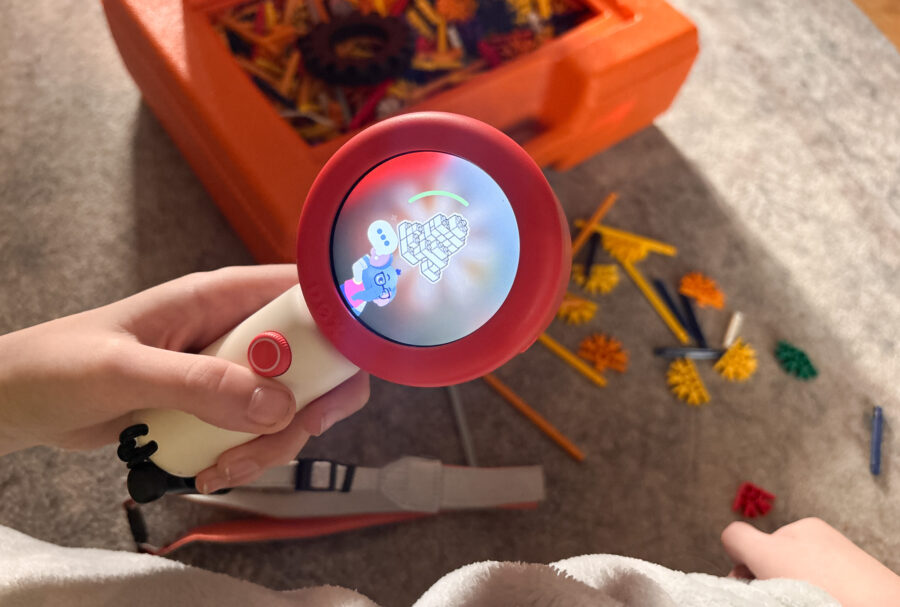
Around the house. The kitchen is still his favourite hunting ground, mainly because that is where we spend most of our time as a family. Every new item that comes home from the grocery store gets photographed. The bathroom, his bedroom, even the garage have all become language learning opportunities. He’s built up a vocabulary of everyday objects that actually matter to him, not just the generic vocabulary words you find in textbooks.
In the garden and outdoors. In my first review I said we hadn’t taken Dex out of the house yet. That has changed. It’s been to the zoo, to the park, on long walks in the countryside. Because it’s built to be dropped, I didn’t spend outings nervously watching it. We live in the countryside with weak mobile reception, but since Dex connects over Wi-Fi at home (and LTE or a phone hotspot on the go), that hasn’t been a problem for us.
Showing off. My favourite change is that he now teaches me. He’ll point at something and announce the word, then wait for me to repeat it. That’s the point where a gadget turns into a family habit. It’s also the point where I realise he’s actually retaining what he’s learning, because he’s confident enough to become the teacher.
What’s Held Up (and What Hasn’t)
Long-term use is where the marketing gloss comes off, so here’s the honest version.
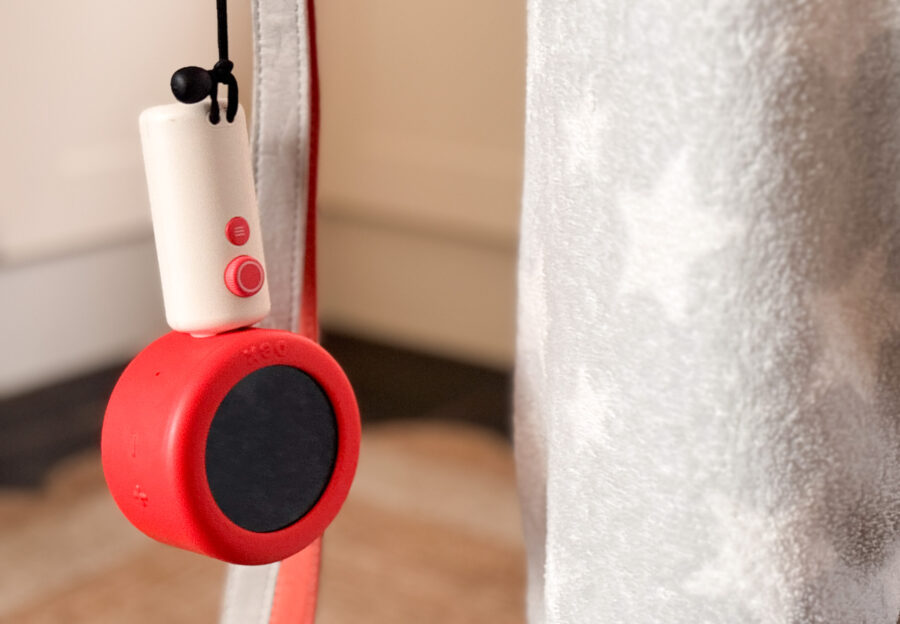
Build quality: The chunky handle and strap have survived months of real kid use. There are a few minor scuffs on the casing, but nothing has broken, cracked, or stopped working. It feels like it was designed by people who understand that children and fragile electronics are not a good combination.
Interest level: It still gets picked up. That’s rare in our house. I think the reason is that Dex doesn’t feel like homework. It feels like a tool he controls through the simple touch screen and kid-focused language. He decides what to photograph, when to use it, what to learn through this more engaging approach and hands-on experiences. That sense of ownership makes a difference.
Battery life: This has been better than expected. We charge it once or twice a week depending on how heavily it’s been used. It holds its charge well, and the charging process is straightforward enough that my son can manage it himself.
Privacy: Dex’s privacy policy is zero data retention for children’s photos and voice recordings, and I still find that reassuring. As a parent, knowing that images of my child and our home aren’t being stored on external servers matters to me. It’s one less thing to worry about.
Limits: It is best for younger children. My son is now 10, so I’d say he’s at the upper end of the sweet spot. However, with Vietnamese being his selected language and being a totally different language style to English, it is better that he is learning absolute basics. Older kids might find the pace too slow for their needs, or want more advanced grammar explanations. But for building foundational vocabulary in a fun way, it works brilliantly.
The honest bottom line: If a child will use it regularly, it earns its place. If it’s going to sit on a shelf, nothing is worth the money. But after several months of watching how Dex has become part of our routine, I’m confident it’s the former.
Dex Is Now Trusted by Over 15,000 Families
When I first reviewed Dex, I was judging it purely on our own experience. Now, months later, it’s clear that what worked for us is working for thousands of other families too. Dex is now used by over 15,000 families worldwide, and the brand has picked up some recognition along the way:
CES 2026 Innovation Awards Honoree in the EdTech category
TIME Best Inventions 2026, Special Mentions. You can read TIME’s feature here: time.com
iF Design Award, Red Dot Award and Golden Pin Design Award wins
50M+ Instagram views on Dex-related content
Dex was also featured on Good Morning America. You can watch the segment here: www.youtube.com
Awards don’t tell you whether your child will like it. But I find it reassuring that a product I was already happy with has earned this much outside attention. It suggests that what I’m seeing at home isn’t a fluke. It’s a well-designed product that’s genuinely helping children learn.
What Makes Dex Different From Other EdTech
I’ve tried language apps with my son before. They lasted about three days. The problem with apps is that they feel like school. You sit down, you do your lesson, you tick it off.
Dex doesn’t work like that. It integrates into the moments that are already happening. You’re making dinner, and your child photographs the ingredients. You’re at the zoo, and they’re learning animal names in real time. The learning happens naturally through object recognition in the physical world, not as a separate activity that needs scheduling and supervision.
That’s why it sticks. It doesn’t ask children to change their behaviour. It meets them where they already are through interactive play and instant feedback.
Black Friday: How to Get the Best Price on Dex
If you’ve been on the fence, this is a good moment to jump in.
25% off Dex during the Black Friday campaign from November 19th to November 30th 2026.
This brings Dex to the lowest price I’ve seen it, and if you’ve been waiting for the right time to try it, Black Friday is that time.
Dex also works well as a Christmas present, since it’s a gift that gets used long after the wrapping paper is gone. It’s not another toy that entertains for a morning and then gets forgotten. It’s a tool that builds a skill, and that makes it the kind of present that parents appreciate as much as children.
Who Is Dex Really For?
After months of testing of Dex, I have a clearer sense of who will get the most out of this educational toy and one of the best language learning tools available.
It’s for children who are curious about the world around them. If your child already asks “what’s that?” or “how does this work?”, Dex channels that curiosity into learning a second language like a scavenger hunt through their everyday environment.
It’s for families who want screen time that actually builds something. Yes, Dex is a device, but it’s not passive entertainment. It’s active learning that happens to be fun, teaching authentic language from different languages in ways that connect to real experiences.
It’s for parents who want their children to appreciate other languages and cultures. In a world that’s increasingly connected, multilingualism isn’t just a nice skill to have. It’s a practical advantage. Dex makes that advantage accessible, whether you’re grocery shopping or exploring the neighbourhood.
It’s for households where traditional learning methods haven’t stuck. If your child zones out with flashcards or resists language apps, Dex offers a completely different approach through custom activities tailored to what they find in their own environment.
Is It Still Worth It?
Yes, and for the same reason as in the summer: this is learning disguised as play.
What has changed is my confidence. Back then I hoped Dex would stick. Now I know it has. I feel that it is important for children to learn and appreciate other languages and Dex is giving my son a fun and accessible way to do so. It is a skill that he can carry with him through life and I am thrilled that he enjoys it.
The fact that he still reaches for it months later, that he’s built up a genuine working vocabulary, that he’s proud to show off what he’s learned, those are the markers of a product that works. Not just in the first flush of excitement, but over time, when the novelty has worn off and you’re left with whether it actually delivers.
Dex delivers.
Where to Get Dex
If you want to find out more, you can visit www.dex.camera.
Whether Dex is right for your family depends on your child, your goals, and your budget. But if you’re looking for a way to make language learning feel less like a chore and more like an adventure, it’s worth considering – especially during the Black Friday sales.