
When you become a parent you often wish that your kids had come with a manual. They are complex little beings who can test you and push you to your limits. One minute they are happy, the next minute they are throwing the most horrendous tantrum- usually in public!


I am not a perfect parent, I am not sure anyone is able to take that crown. I do think I do a good job on the whole as my children are happy- for me that is the main thing. I am always on the look out for handy tips though, anything to help me improve or to make my life that little bit easier.

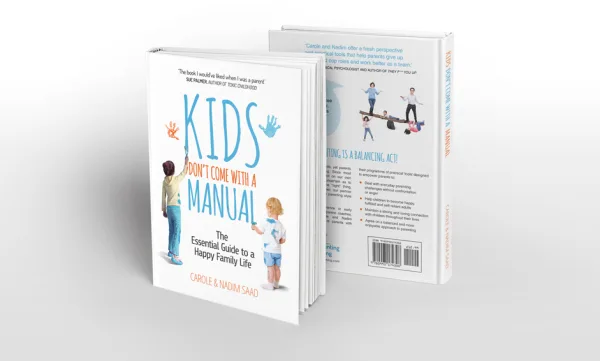 I was recently asked to take a look at a book called ‘Kids Don’t Come With A Manual- The Essential Guide to a Happy Family Life’ by Carole & Nadim Saad. I almost didn’t take up the opportunity as I have not managed to find the time to read a book in about 18 months! I am so glad I did though as I could not put it down- every page I was nodding my head and making mental notes of things to try out with my family.
So who is the book for?
Honestly I would say any parent, whether you are a new mum or dad or you have been a parent for years. It is never too late to learn something new and try a new approach. The book does not take a ‘you must do this’ approach, it is more about showing you ways that have worked for them as a couple, for you to take on board if you wish. By the end of the book I respected their approach and have already been trying various tricks- and yes, they have worked!
I thought I would share a few tips with you, some that I found particularly useful.
1. TEAMWORK Make sure you and your partner are on the same page, working together will show a united front and make parenting easier. This is something I have struggled with, my parenting style is very different to Mr F and this can mean I question his style in front of the girls. The book tells you that if you agree on the core values for your family then the way they are enforced doesn’t matter. This is something I am going to sit down and discuss with Mr F.
2. CHOICES When you are faced with an uncooperative child, offer them choices. Two is plenty and they should both be favourable to you. For example: ‘would you like to tidy up now or in 5 minutes?’. Giving the child control will make them more likely to do as you ask. I have always done this and it works a charm!
3. POSITIVITY When a child asks for something you cannot give them, you can still respond positively. The example that they give in the book made me smile: If a child asks for a pony then you respond with ‘Yes, you can have a pony when you are old enough to pay for it’. You are not saying no but you are giving them a valid reason as to why it isn’t possible now. I have been using this when Little G asks for snacks 100 times a day!
4. 1:1 TIME This is so important, if you have more than one child you should schedule in 1:1 time once a week and if they are under 5 it should be 10 minutes a day. Each child needs to know they are valued and what better way to show them than by giving them your time? I have always been good at giving Little G time when L is asleep but the other way around is very hard. I have been giving Little L time in the evenings when Mr F is home to spend time with G.
5. PRAISE More specifically, descriptive praise. For example, when your child shows you a picture you have drawn you probably say ‘Wow what a great picture’ which of course is a great way to respond. However, if you respond with ‘I love the way you coloured within the lines’ they will see that you value their effort and they will feel a sense of pride in their work.
Accentuate the positive, reduce the negative.
6. CELEBRATE Children see and hear everything. The number of times I hear parents telling friends about bad behaviour their child has displayed, while their child is in ear shot! Have you ever celebrated their great behaviour? Try telling someone about how great they are when you know they will be listening- it will make them more likely to do more great behaviour in future!
7. ME TIME Having children is tiring, we spend all of our time looking after someone else and it means we fail to take care of ourselves. Making sure you schedule in ‘me time’ means you will be better equipped to look after everyone else.
8. LANGUAGE Modifying the way you speak to your children can make such a difference. By switching around a couple of words you can make them cooperate in various situations. So instead of saying ‘hurry up and put your coat on otherwise we aren’t going to the park’ you say ‘I take children to the park who have their coats on’. They will put their coat on in a flash!
9. CONSEQUENCES This is such an important parenting tool! Children need appropriate consequences that suit the misbehaviour. So, if a child has failed to tidy their room after you have repeatedly asked them calmly using the language above, instead of saying ‘you haven’t tidied your room so now we aren’t going to the park’ you say ‘Uh oh, looks like you are going to have to stay home and tidy your room’. The consequence is that they are going to have to tidy their room and for that they will miss the chance to go to the park. Make sure you follow through too- that is so important!
10. TIME AWAY This is a modified idea to the well known ‘naughty step’ which I myself have used. The idea is that instead of punishing them, secluding them from the rest of the family, you send them to a happy place to calm down and correct their behaviour. So, instead of sending them in shame to their room you would say ‘uh oh, I think somebody needs some time away’. I have to say this is the one tool I struggled with as a concept. However, I gave it a go and Little G still didn’t enjoy the fact I had removed her, she was aware I was unhappy. After she felt she had calmed down she came back downstairs and apologised. Our afternoon was much nicer and her behaviour did improve.
These are just 10 of the 33 tools listed in the book. None are particularly radical but the approach taken is gentle but with direction and confidence. Key to everything is building a respectful relationship between parent and child. If they respect you, the methods you use and the consequences you enforce, they will be more willing to cooperate and behave in a balanced and positive manner.
If you want to get the book for yourself then you can find it on the Best of Parenting website. The great news is I have a book to give away! To win a copy of Kids Don’t Come With A Manual then complete all of the Rafflecopter options below.
I was sent a copy of the book for the purpose of the review, all opinions are my own.

Karen Usher
Sunday 3rd of May 2015
Its ok to be silly! Act silly, put on silly voices when reading books etc, I remember my Mum doing this when I was little and I loved it!
soneailiami
Sunday 3rd of May 2015
Patience, Patience and Patience
Kim Styles
Sunday 3rd of May 2015
Unless they are endangering themselves or others- ignore tantrums - responding makes them a big deal.walk away and pretend the tantrums dont existand do not reward with bribes to stop- this method is workable what ever the age
barrie piper
Sunday 3rd of May 2015
has to be smile and laugh with them and hold them tight when they want cuddles
Minnie15
Sunday 3rd of May 2015
Try to suppress irritability as it will only come back on you! Patience and listening skills are a must though will develop swiftly with experience :) x