
Inside: Why Hickory Floors Suit a Slow Living Family Home. Collaborative post.
A slower home is rarely a perfect one. There are muddy wellies by the door and library books on the stairs. The things that last there are the ones that look better for being used.
Floors are a good test of that idea. If you have been drawn to natural hickory wood styles, you have probably noticed they look nothing like the calm, even oak in most showrooms. That restless grain is exactly why hickory suits a family that would rather live in a room than protect it.
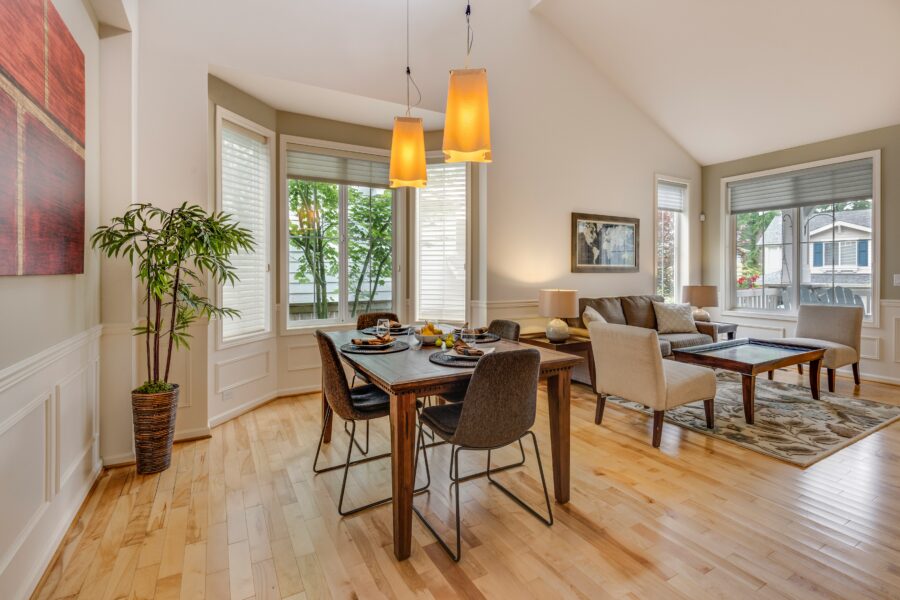
Photo by Francesca Tosolini on Unsplash
What Does Slow Living Ask of a Floor?
Slow living is about choosing with intention and keeping what earns its place. Katy describes it as learning to live with intention, not at a snail’s pace. Applied to a floor, that means buying once and buying for the long run.
A floor chosen this way has three jobs. It has to cope with daily wear without fuss. It has to age in a way you still like in 15 years. And it has to be repairable, so a bad patch does not mean starting again.
Hickory scores well on all three. It is hard wearing, its looks improve as small marks blend into the pattern, and solid boards can be sanded back when they need a refresh.
Why Does Hickory Look So Different Board to Board?
Hickory is a wood of contrasts. Purdue University’s extension guide to hickory and pecan calls it the densest and strongest North American hardwood lumber category. It also explains why no two boards match.
The outer sapwood is white and can be several inches wide on some trees. The inner heartwood ranges from pale brown to reddish-brown. A single board can carry both, so a floor shifts from cream to caramel to deep brown across a room.
The same guide lists bird peck, small bark pockets and small knots as typical of the species. In many floors those marks are kept on purpose for a rustic accent. Purdue also notes there is no difference in strength between the white sapwood and the darker heartwood, so the variation is purely visual.
Will a Busy Grain Make a Room Feel Busier?
It can, if everything else in the room is also busy. Hickory works best when it is the one pattern the room leans on. The rest of the scheme can then stay quiet.
Plain walls in chalky whites or soft greens let the boards breathe. Linen, wool and cotton in simple weaves sit happily on top. If you love a patterned rug, keep it small or tonal, and this site’s guide to rug colours is a helpful place to start.
Think of the floor as the texture and the furniture as the calm. That balance is what makes a characterful floor feel restful rather than loud.
Which Hickory Styles Are There?
Hickory comes in several forms. Really Cheap Floors is a US retailer that ships within the continental United States. Its hickory range is grouped in a way that teaches the vocabulary well.
- Prefinished solid: boards finished at the factory, so the room is usable soon after fitting.
- Engineered: a real hickory top layer over a stable core, often chosen over underfloor heating.
- Handscraped: a surface shaped by hand tools, which hides dents and scuffs very well.
- Grade: boards sorted by how many knots and streaks they carry, from fairly plain to very rustic.
- Width: narrow strips feel traditional, while wide boards show fewer joins.
If you live in the UK, use that list as a guide when you speak to a local supplier and fitter. The terms travel well, even when the shop does not.
How Can You Choose Without Rushing?
A slow decision is usually a better one. Instead of picking from a screen in one evening, give the choice a few weeks:
- Order 3 or 4 samples and leave them on the floor for 7 days.
- Look at them in morning light, at teatime and under lamps.
- Walk on them in shoes, drop a set of keys and see what shows.
- Ask whether the wood is certified and what the label means.
- Check whether solid or engineered boards suit your subfloor and heating.
- Plan for the boards to settle in the room before fitting.
On certification, FSC UK sets out what its three FSC labels mean. FSC 100% wood comes from FSC-certified forests, while FSC Mix can include recycled material and controlled wood. Asking that one question tells you a lot about a supplier.
Settling matters with hickory in particular. Purdue notes that the true hickories shrink the most of all when the wood is dried, so a good fitter will be careful about moisture before the boards go down.
How Do You Care for a Floor at a Slower Pace?
A natural floor does not need a complicated routine. A few small habits keep it looking good for years:
- Sweep or vacuum little and often, so grit does not scratch the finish.
- Wipe spills straight away with a damp, not wet, cloth.
- Put felt pads under chairs and the kitchen table.
- Leave a basket for shoes by the door.
When marks appear, see them as part of the story. A dent from a dropped toy soon softens into the grain.
A Floor That Grows Into the House
Hickory will never look showroom-perfect, and that is its quiet strength. Its knots, streaks and colour shifts make room for family life rather than fighting it. Choose it slowly, live with the samples and let the floor become part of the home you are building.
Frequently Asked Questions
Is Hickory a Good Floor for a Busy Family?
It suits most families well. Hickory is among the densest and strongest North American hardwoods, and its varied grain hides everyday marks well. A handscraped or rustic grade hides even more.
Why Does Hickory Have So Much Colour Variation?
Each board can contain pale sapwood and darker heartwood, which differ a lot in colour. Small knots, streaks and bird peck add more variation. Many people choose hickory for exactly that look.
Is Engineered Hickory Better Than Solid?
Neither is better in every home. Engineered boards are steadier where temperature and humidity change, such as over underfloor heating. Solid boards can usually be sanded more times over their life.
Does a Rustic Floor Suit a Calm, Minimal Room?
It can, if the rest of the room stays simple. Pair a characterful floor with plain walls and natural fabrics. Let the floor bring the texture while the furniture keeps things calm.