
Inside: A look at the pros and cons of putting a tv in your child’s bedroom. Collaborative post.
There is no denying that television plays a big role in all of our lives. We all love watching our favourite TV series and snuggling up to watch movies on the sofa. But when do you make the jump from having a shared TV downstairs to allowing children to have their own tv in their bedrooms?
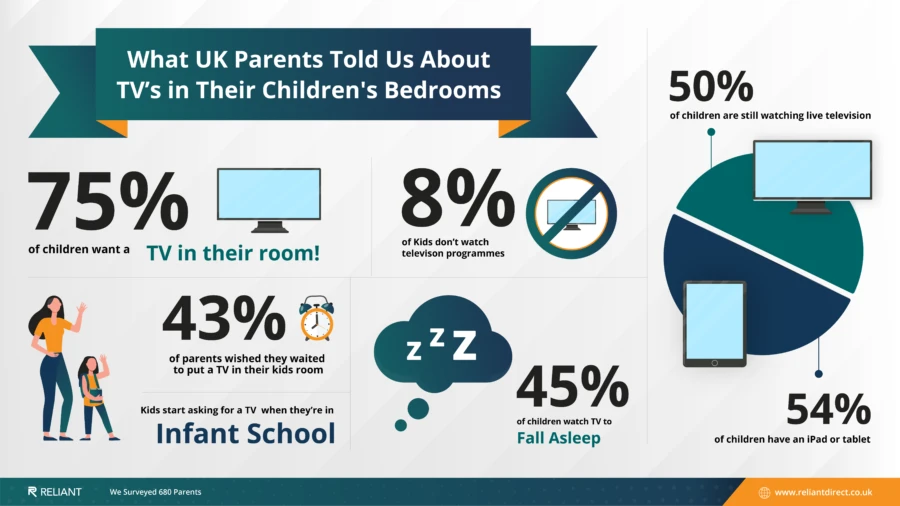
According to research carried out by Reliant, children start asking for their own TV between 4 and 7 years old. And every parent will ask themselves whether it is the right thing to do or not.
This post will explore the pros and cons and hopefully help you to decide what is best for your family.
The role of the television
TV is great and there are so many benefits to having one in your home. My children discovered a love of phonics from watching Alphablocks on Cbeebies, we enjoy family time watching movies on Netflix, we learn about our planet watching David Attenborough’s documentaries on BBC – the list goes on.
Movies and TV shows can bring people together, get people talking, make you laugh or cry and teach you knew things.
The problem with TV, and technology as a whole, is when it takes over your life.

We currently only have one TV in our house and that is in our living room. I haven’t got one in the main bedroom as I hated that my husband would lie awake for hours watching rubbish when we had one upstairs in the past.
This has probably been why none of my children have asked for their own TV as they view it as a shared resource. However, I am not so naive to believe that they won’t ask for one as they reach teenage years.
As they get older and have their own interests, they may not want to watch the same movies as us or they may just want to enjoy their favourite show in peace. When that time comes, I will have to set ground rules and revisit the pros and cons myself.
Should I put a TV in my child’s bedroom?
75% of children would like a TV in their bedroom, so what are the points to consider when making a decision?
Personal space
As a family you won’t always agree on what to watch. Having more than one TV means there is more choice – perhaps the adults watch one thing and the children all go and enjoy something else.
Another use for the TV of course is gaming – if you have a PlayStation or XBox etc then you can have that hooked up to their TV and reclaim the main TV for yourself.
Of course, the extra TV doesn’t have to be in their bedroom. If you have a playroom or spare room then you could have the TV in there for those occasions when there are differences in opinion for what to watch.
Reclaim adult space
Do you find yourself only ever watching kids tv? Fed up with Nick Jr and Disney+ constantly being the background noise to your life?
Having another TV in the home allows you to reclaim your space so you can have peace and quiet or watch your own favourite show without the kids moaning.
Content suitability
The main concern for any parent is keeping their child safe at all times. And so the biggest worry would be whether your child would have access to anything inappropriate for their age.
Thankfully, there are more safety features available to us compared to when we were children. For example, if you have a Netflix account you can use the parental controls to set age limits for content and password protect the other accounts used by older members of the family.
Late nights
I used to stay up for hours watching rubbish on TV and so I would definitely want to set boundaries to avoid my own children doing the same. A certain element of trust is needed here but if it is broken you can either remove the TV or use technology to switch off plugs, limit internet access and prevent them pushing the boundaries again.
Sleep disturbance
We all know the effects of blue light on our natural sleep rhythms. With mobile phones and tablets already being part of our daily lives, adding a TV into bedrooms only exacerbates the problem. 45% of children who have TVs in their room watch it to fall asleep – that is not the best way to unwind from the day.
Mental health
While children are busy watching videos on YouTube or playing video games, they are spending less time reading, playing with their toys, and interacting with friends and family in person.
Mental health is at an all time low and children are not exempt. Staring at screens all day every day is damaging – not just through a TV but through the use of tablets and phones too with 54% of children having their own devices. Limiting use would be better for all of us.
There is no right or wrong answer and each family situation is different. If you trust your child not to abuse your trust and can put safety features in place to protect them, then giving them their own TV can give them a sense of independence and give you your own space back.
However, if you don’t think you could trust them not to sit up late watching rubbish or spending more and more time alone in their room, then perhaps wait until they are older before giving them their own TV. 43% of parents say they wish they’d waited, so perhaps it might be worth you waiting too.
Reliant have some amazing 8K TV deals if you are looking to buy a new TV for your home, whether that be for your child’s room or not.