
Inside: The Difference Between Tarot and Oracle Cards: Which Is Right for You? Collaborative post.
What to choose for divination — Tarot cards or an Oracle deck? Though these tools are used for divination and personal reflection, they have some key differences.
Should you choose one and stick to it? Absolutely not! But you should know when to rely on your favorite tarot deck and which questions to “delegate” to Oracle cards.
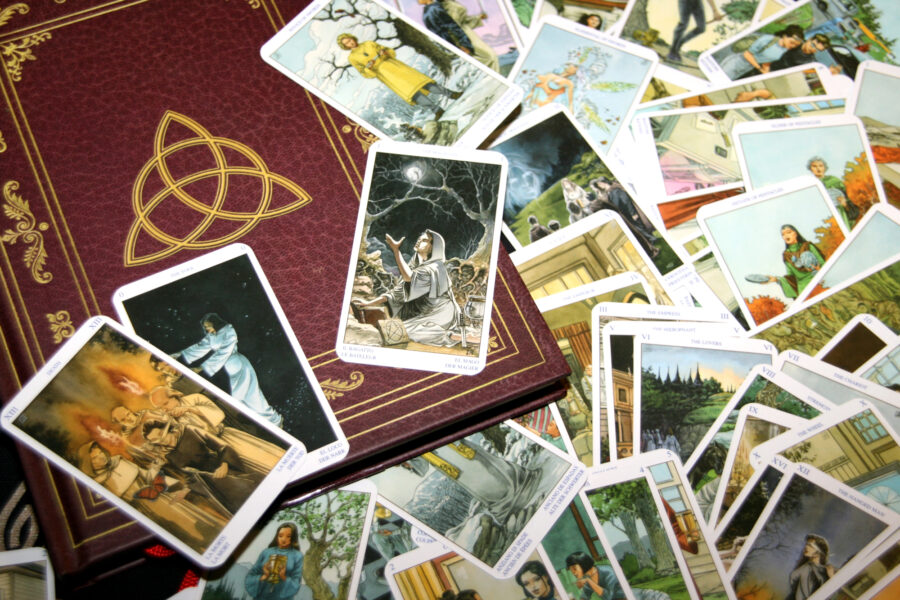

Key Differences Between Oracle and Tarot Cards
Tarot follows a structured system with 78 cards, which are divided into Major and Minor Arcana. You can use any of them separately (though using Minor Arcana separately is not done too often) or both decks together.
The Major Arcana consists of 22 cards representing major life themes and spiritual lessons. The Minor Arcana, in its turn, has 56 cards in four suits (Pentacles/Coins, Cups, Swords, and Wands) dealing with day-to-day matters.
Classical or online Tarot readings often rely on traditional card meanings and established spreads. Of course, you can use Tarot cards in different ways, especially once you gain some experience, but most Tarot readers prefer classical, tried, and true spreads that have worked for centuries.
Oracle cards are more flexible and varied. They can have any number of cards and follow whatever system their creator designed. The creative and spiritual power of each particular creator becomes a powerful tool.
The imagery and messages tend to be more straightforward and accessible to beginners. Oracle decks might focus on specific themes like angels, astrology themes, animals, or affirmations.
So, in short:
Tarot cards
- A structured system of 78 cards: Major and Minor Arcana cards
- Traditional meanings and spreads developed over centuries
- Deep symbolic interpretations that require more study and practice
Oracle cards
- Flexible number of cards with creator-designed systems
- More straightforward, intuitive messages, often for specific themes
- Easier entry point; more modern, accessible interpretations
To get a good start in the mystique world of divination, get an accurate tarot card reading online from the best experts answering your most burning questions. Then, you can master the chosen deck at the right pace, not rushing into things. Divination cards are not about speed, they are about spirit and practice.
Should Beginners Start with Oracle or Tarot Cards?
Both Tarot and Oracle cards offer unique paths for beginners. Each system has its learning curve and rewards, making the choice highly personal. Whereas Oracle cards provide immediate accessibility, Tarot offers a deeper structured approach.
- Should you start with a simpler option and then learn Tarot?
- Is there a way to make an easy start with tarot books and card decks?
- Can reading the cards in one “system” help you do better in another?
Let’s figure this out together.
How to get started with tarot decks
Tarot works like a structured language with 78 cards as your vocabulary. Starting with the Major Arcana (22 cards) provides a strong foundation, before moving on to court cards and pentacles in the Minor Arcana. These cards represent major life themes and spiritual lessons that form the core of Tarot practice.
The Rider-Waite deck remains popular for beginners due to its rich symbolism and clear imagery. Begin your practice with simple methods: try a basic tarot spread like drawing one card each morning asking, “What energy surrounds me today?” or explore three-card readings from different angles. The meanings will become familiar through regular practice and observation.
How to get started with oracle decks
Oracle decks (and their close cousin, Lenormand) offer immediate accessibility with their diverse themes and straightforward messages. Each deck reflects its creator’s vision — you might find yourself drawn to nature spirits, celestial beings, or simple affirmations. The absence of rigid rules allows for a more intuitive approach from the start.
The learning curve tends to be gentler with Oracle cards. Many decks include interpretive text right on the cards, making initial readings more approachable. Your connection with the deck’s theme often guides the interpretation naturally — whether you’re working with animal spirits, elements, or ancestral wisdom.
Choose the deck that resonates with you personally. Some readers begin with Oracle cards before exploring Tarot, while others prefer starting with Tarot’s structure. Both paths can lead to meaningful practice — trust your instincts about which system feels right for your current journey.
Oracle Cards vs. Tarot Cards: Which Are Right for Me?
When you see dozens of beautiful card decks — some traditional, others with modern art, angels, or animals — it’s natural to wonder which direction to take.
Tarot cards feature 78 cards with swords, cups, and characters like The High Priestess or The Fool. Starting with Tarot means learning what these traditional symbols represent, as each card carries its own meaning and story. You can start with basic online Tarot readings and then choose the deck that features your vision the most. The Rider-Waite deck remains popular for beginners because its images clearly convey these meanings.
Oracle cards take a different approach. Each deck reflects a unique perspective – from animal spirits to angels or nature themes. There’s no fixed number of cards, and the messages are typically written on the card itself. Most Oracle decks include comprehensive guide books explaining each card’s interpretation.
Here’s what you might prefer about each:
Tarot cards
- You enjoy learning established systems
- You want to explore deep symbolism
- You appreciate traditional spreads and meanings
- You’re drawn to historical divination practices
Oracle cards
- You want to start readings immediately
- You prefer direct, clear messages
- You like choosing specific themes
- You want flexibility in interpretation
Many readers start with one type and explore the other later, while some use both — Tarot for deeper readings and Oracle cards for daily guidance. Choose based on what interests you most right now — your first deck choice isn’t permanent.
Using Tarot and Oracle Cards Together
For deeper insight, combining tarot and oracle cards adds depth and clarity to readings. Oracle cards can provide additional insight or a clearer message when a tarot reading feels complex, while tarot cards can add structure when Oracle messages need more context.
For example, you might pull a Tarot card asking about a career decision and get the Seven of Cups, which suggests multiple choices and possible confusion. Adding an Oracle card could pinpoint which opportunity deserves your focus or what aspect of the decision requires attention. If you are still confused about the answer, consider getting an online Tarot reading.
Tarot for structure, oracle for clarity
- Start with a Tarot spread to understand the situation
- Add one Oracle card for clear, actionable guidance
- Use Oracle cards to explore specific aspects that the Tarot highlights
Oracle for theme, tarot for details
- Pull an Oracle card to set the reading’s overall theme
- Use Tarot cards to explore how this theme plays out in your life
- Let the Oracle’s message guide your Tarot interpretation
Many readers find this combination particularly helpful when:
- Working through complex decisions
- Needing both practical and spiritual guidance
- Looking for confirmation of intuitive hits
- Wanting to explore a situation from multiple angles
There’s no strict rule about mixing decks — experiment to find what works for you. The key is letting each system’s strengths complement the other.
Trust your instincts — if a deck’s artwork, theme, or tradition speaks to you, that’s likely a sign it will be a valuable tool in your practice. There’s no wrong choice; it’s all about what feels right for you in your spiritual journey or self-reflection routine.